Every language has words impossible to translate in the english language.
In Korean, its 한 and 정.
And within these letters and syllables are layers of histories, entrenched in the formation of how Korea exists today.
A little over a century ago, the economic powerhouse of a country was a colony, relentlessly fighting for independence from Japanese colonial rule. Under Japanese imperialism, Korea’s land, labor, and resources were systematically exploited to serve the interests of the Japanese Empire. The Korean people were stripped of their political autonomy and subjected to a colonial system designed to benefit the imperial state.
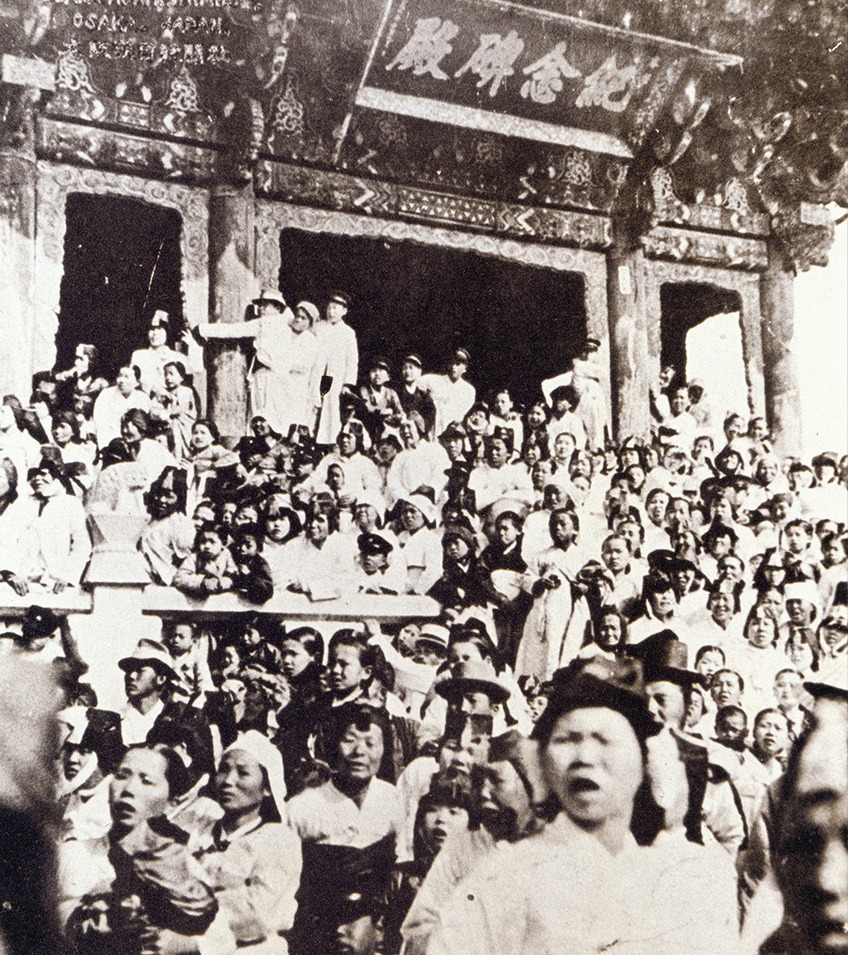
In opposition, the people of Korea united and led the 삼일 (Samil) Movement—one of the most significant independence movements in the struggle for freedom. Beginning on March 1, 1919, the Samil Movement consisted of widespread peaceful public demonstrations. Substantially inspired by the principle of self-determination, Koreans demanded the right to determine their own future and declared their commitment to the “eternal and free development” of their people.
The movement was founded upon the belief that nonviolent resistance could catalyze change. And this effort was remarkable: Koreans responded collectively to relentless Japanese oppression. Yet despite the peaceful nature of the demonstrations, protestors were met with arrests, torture, and killings. Gunfire echoed through cities, permeating schools, churches, and homes. More than 7,500 people were killed in the suppression of the movement.
The unbridled resistance of the Samil Movement reveals how, in the face of injustice, brutality, and oppression, the strength of unity and the unrelenting will to resist can persevere. Korea would not gain independence until 26 years after the beginning of Samil, enduring decades of colonial suppression. When Korea eventually achieved “eternal and free development” of their people, the movement holds immense weight for Korea’s liberation.
Its legacy became a language of its own and the movement’s endurance is best represented by two words.
한 is best described as an internalized feeling of collective sorrow, unexpressed grief, deep resentment, and injustice. There can never be a direct translation for this—not only because of the multifaceted definition but because it was forged through a painful history of political harship and the suffer for freedom. 한 renders brutality and violence into a quiet grit, carrying the weight of what has been lost and what remains unresolved. The community-oriented nature of Korean society, shaped in part by generations of shared hardship, propogates a profound sense of “us.”
정 describes that very profound emotional bond: the loyalty, affection, familiarity, and warmth that develops between people and communities. It counters transactional relationships through the deliberate practice of caring for one another. It is communal kinship, carried across generations.
한 and 정 cannot coexist in absence of one or the other. The shared suffering and historical weight of 한 creates the underlying need for the deep, healing connections found in 정, carrying forward the spirit of the Samil Movement.
Today, March 1 is a national holiday in South Korea, known as 삼일절 (Samiljeol). Every year, the country gathers in remembrance, honoring those who fought for the freedom that generations after them would inherit. The movement continues to echo through time, and with it, 한 and 정 cultivate a thread that connects people across generations and communities.
We continue to find 한 and 정 everywhere. In the scattered conversations on the street. In the honk of a car at a street protest. In the search for fragments of our history, and in the ways we piece those fragments together to actively archive what cannot—and should not—be erased.
In a culture shaped by continuous remembrance and reclamation, 한 and 정 remind us of the values that steer the communities we build.
Political hardship, brutality, division will continue to seek dominance.
But our communities are worth fighting for, and it is with our 한 and with our 정 that we can strive to make it possible.
Further Reading & Media:
- https://explorepartsunknown.com/korea/han-jeong/
- https://acsforum.org/how-the-korean-social-emotions-han-%E6%81%A8-and-jeong-%E6%83%85-transformed-bong-ha-village-into-a-sacred-place-for-democracy/
- https://exhibitions.library.columbia.edu/exhibits/show/kio
About the Author:
Caroline Shin is based in Southern California and the founder of the Liberation Archive. Often fueled by obscene amounts of caffeine, she spends her time taking hip-hop dance classes, working on her poetry, and scouting for the best matcha. Her favorite time of day is when the streetlights just begin to turn on.
 The Liberation Archive
Leave a comment